Wait! Don’t Go Yet! 👋
Compare Before You Book.
Explore offers from multiple verified Hajj operators and make an informed decision with transparent comparisons.
Compare Before You Book.
Explore offers from multiple verified Hajj operators and make an informed decision with transparent comparisons.
عمرة مقبولة إن شاء الله
Four sacred pillars. One profound journey. Understand every ritual, every ruling, and every dua — so you can stand before the Kaaba with full confidence and an open heart.
"From one Umrah to the next is an expiation for whatever sins come in between them, and a Hajj that is accepted will have no less a reward than Paradise."— Sahih al-Bukhari & Muslim · Narrated by Abu Huraira (RA)
Umrah is a highly recommended Sunnah that wipes away past sins and renews the soul. Unlike Hajj, it can be performed at almost any time of the year, and typically takes three to six hours to complete once you enter the Haram. But its reward lasts a lifetime — and perhaps beyond.
Perform a full-body Ghusl with the intention of purification before Ihram. Use unscented soap. This is highly recommended (Sunnah Mu'akkadah) before entering the state of Ihram.
Come to Umrah with a clean slate. Seek forgiveness from Allah for past sins, and from any people you have wronged. Pay back any debts. The journey is far more powerful when you begin it unburdened.
The Talbiyah is the pilgrim's signature call to Allah. You will recite it from the moment you enter Ihram until you begin Tawaf. Memorise it so you can feel its meaning, not just its words.
Labbayk Allahumma Labbayk. Labbayk laa shareeka laka Labbayk. Innal-hamda wan-ni'mata laka wal-mulk. Laa shareeka lak.
Pack light but thoughtfully. Every item should serve a specific role in the conditions of the Haram.
Umrah has four obligatory pillars (Arkan). Omitting any one of them invalidates the Umrah and cannot be compensated for by a penalty. Do them in order, do them well.
الإحرام والنية
Ihram is not merely a garment — it is a state of being. The moment you declare your Niyyah and recite the Talbiyah, you cross from the ordinary world into the sacred. You cannot undo this state by removing the cloth; the state is in the intention and the rules that bind you from this moment forward.
The Miqat is the threshold you must not cross without being in Ihram. If you are flying, the pilot will announce when the plane crosses the Miqat boundary. If you are already in Makkah or inside the Miqat, travel to the nearest Masjid al-Tan'eem (Masjid Aisha) to put on Ihram from there.
Make the intention: "Labbayk Allahumma Umratan" — O Allah, here I am to perform Umrah. Begin the Talbiyah immediately and recite it continuously until you see the Kaaba.
Prohibited in Ihram
Minor violations (using scented soap accidentally, briefly covering the head) require a Fidyah — slaughtering an animal or fasting or feeding six poor people. Intentional intimacy invalidates the Umrah. When in doubt, ask your Mubarakhajj guide immediately.

طواف العمرة
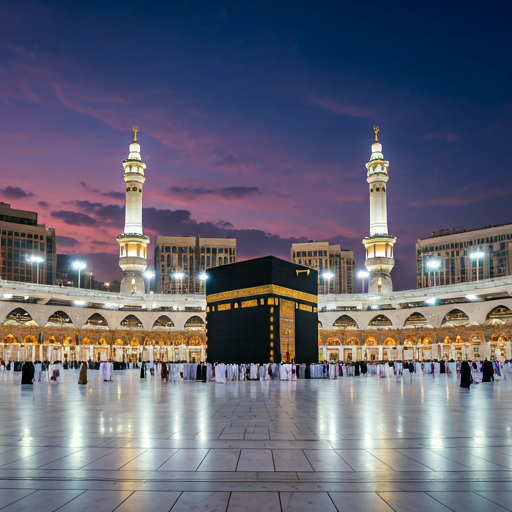
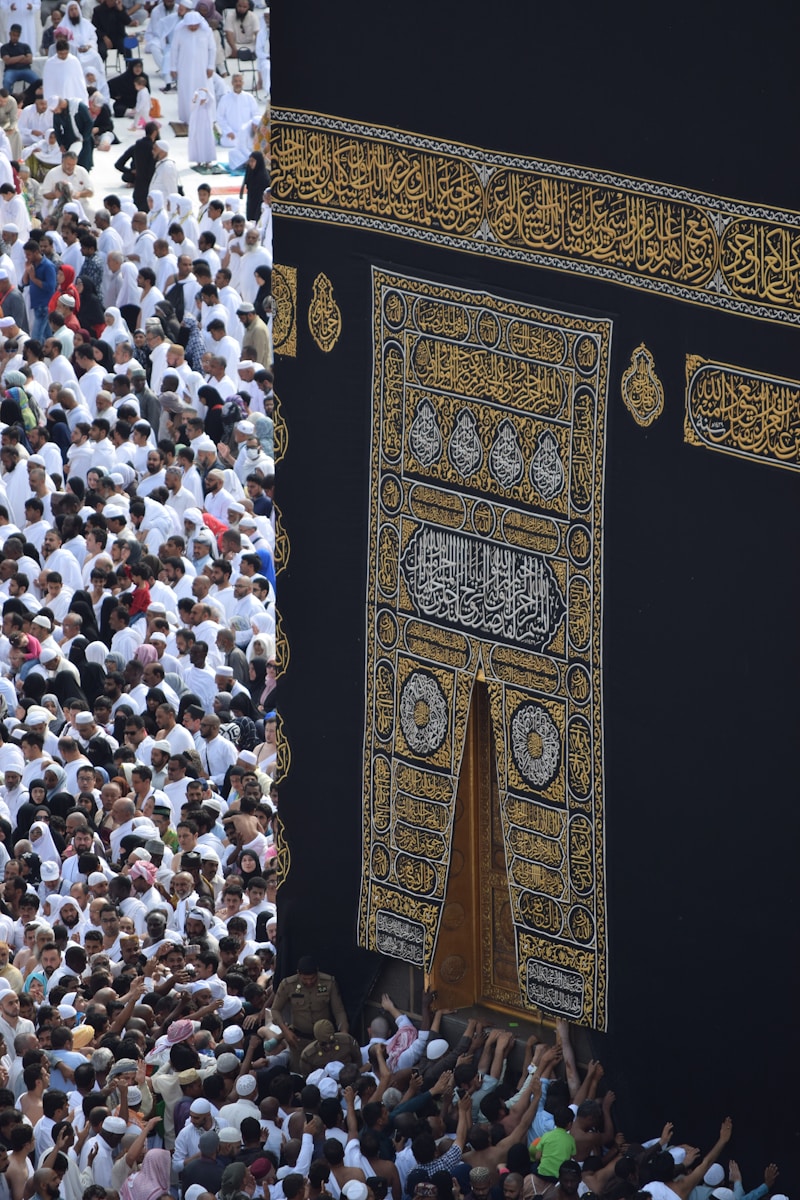
Tawaf means circling. You will walk counterclockwise around the Kaaba seven complete rounds, beginning and ending at the Black Stone. This act mirrors the angels circling the Bayt al-Ma'mur in the heavens above — and millions of Muslims have performed this same walk since the time of Ibrahim (AS).
Stop reciting the Talbiyah the moment you see the Kaaba. From now until the end of Tawaf, engage in personal Dua, Dhikr, and Quran recitation — there is no fixed Dua for each round. Speak to Allah in any language, in whatever words come from your heart.
If you are unsure whether you completed 5 or 6 rounds, assume the lower number (5) and continue. It is better to do an extra round than to miss one. Track with a counter app or quietly use your fingers.
السعي بين الصفا والمروة
This walk is one of the most emotionally resonant rituals in Islam. Sa'i re-enacts the desperate search of Hajar (AS) — wife of Ibrahim — who ran back and forth between the hills of Safa and Marwah seeking water for her infant son, Ismail (AS). At the moment of her greatest need, the Zamzam spring burst from the earth. We walk this path to remember: trust in Allah is never misplaced.
You will make 7 passes: starting at Safa, ending at Marwah. Each one-way trip counts as one pass. Safa to Marwah = 1. Marwah back to Safa = 2. And so on until you reach Marwah on the 7th pass.
She did not sit and wait for a miracle. She ran — back and forth, seven times — with full trust that Allah would provide. As you walk this path, reflect: in what area of your own life do you need to act and then trust Allah with the outcome?

الحلق أو التقصير
After completing your Sa'i at Marwah, you have one final act before your Umrah is complete: cutting your hair. This act symbolises the shedding of the old self — it is an outward sign of an inward transformation. It is not cosmetic. It is a declaration that you have answered Allah's call and returned changed.
The cutting must be done inside the boundaries of Makkah (the Haram). Do not cut your hair on the bus or at the airport. Barbers are available near the Masjid al-Haram, and for women, this can be done in private accommodation.
If this is your first time, sit for a moment after your hair is cut. Feel the weight of what you have just done. Between one Umrah and the next, all minor sins are forgiven. You leave lighter than you arrived. Ask Allah to accept it, grant you another, and let you return again.
A rough timeline for a typical Umrah. Timings vary based on crowd levels, your hotel's distance from the Haram, and your pace.
Perform Ghusl at your accommodation, put on Ihram garments, make your Niyyah, and begin reciting the Talbiyah. If flying, do this before boarding or at the Miqat airport boundary.
Enter with your right foot, reciting: "Bismillahi, Allahumma salli 'ala Muhammad, Allahumma aftah li abwaba rahmatik." Stop reciting Talbiyah the moment you see the Kaaba.
Depending on crowd density, each round takes 10–20 minutes. Stay calm, maintain Wudu, and focus on Dua rather than rushing. The closer you are to the Kaaba the more intense the crowd; the outer rings are calmer.
Pray 2 Rak'ahs behind or facing Maqam Ibrahim (if the crowd is too large, anywhere in the Masjid is valid). Then drink Zamzam. Take your time here — there is no rush.
The Mas'a (the walkway between Safa and Marwah) is air-conditioned and less crowded than the Tawaf area. Each pass is approximately 450 metres — roughly 3.15km total. Walk steadily, make Dua, and remember Hajar (AS).
Proceed to one of the nearby barbers (for men) or return to accommodation (for women). Once done, remove your Ihram and change into your normal clothes. Your Umrah is complete.
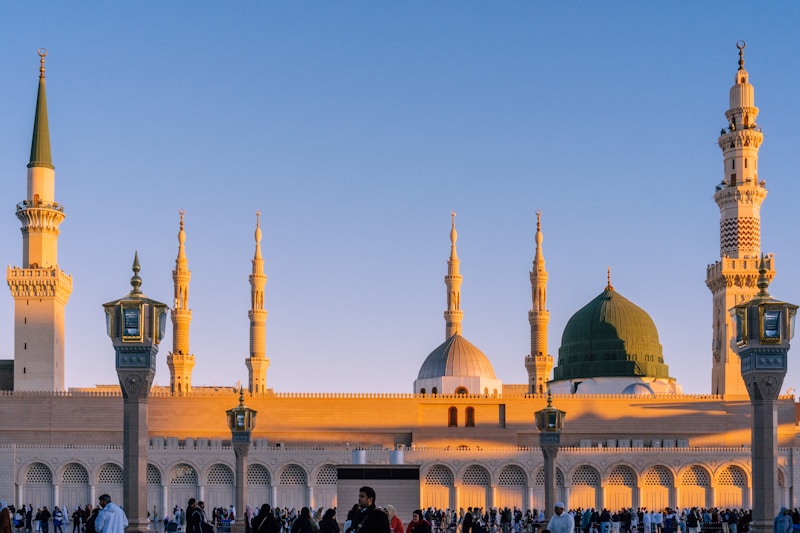
Spend additional time in the Haram in voluntary prayer, Quran recitation, Dua, and sitting in contemplation. Visit Masjid an-Nabawi in Madinah. These are not part of Umrah but are among the greatest blessings available.
Memorise these before you arrive. When you are standing before the Kaaba for the first time, the last thing you want to be doing is reading from a phone screen.
This guide prepares your mind. Mubarakhajj's scholars and experienced guides will walk every step with you — ensuring your ibadah is correct, your journey is safe, and your heart is focused on what matters.
© 2026 Mubarakhajj · For personal rulings specific to your situation, always consult a qualified scholar.